

Planning a Corporate Retreat or Offsite in Austin or the Texas Hill Country? Here’s What to Think About
Planning a corporate retreat or offsite can be a big undertaking, especially when you’re balancing the logistics of the event with your actual day job. Whether you’re bringing a leadership team together, planning a company-wide gathering, or creating time for a remote team to connect in person, there are a lot of moving pieces to consider. Here are a few things to think about as you start planning your next retreat or offsite in Austin or the Texas Hill Country.
1. Start with the purpose of the retreat or offsite
Is this a team-building event? Leadership planning? Strategic work? A celebration? Or simply an opportunity for a remote team to get together in person? (I’m seeing a lot more of the latter.)The purpose of your retreat will help shape the entire event, from the venue and agenda to the activities, food and beverage, and overall guest experience. There may also be secondary goals for the event, so keep those in mind as you make decisions.Getting clear on what you want people to accomplish — and how you want them to feel when they leave — can make the rest of the planning process much easier.
2. Choose the right Austin-area setting
Now that you’ve got your North Star, it’s time to think about the location. Austin and the Texas Hill Country offer a wide range of options for corporate retreats and offsites.You could host your group at a downtown Austin hotel in the middle of the action, choose an East Austin boutique hotel with a little more character, head out to a Hill Country ranch, or opt for something more unique, like a resort or geodesic dome property. Honestly, the options are vast here! The setting will have a big impact on the overall experience, so it’s one of the first things to think about. Consider how much you want your guests to be able to explore outside of the programmed event, how much travel you're comfortable with, and whether the setting supports the kind of experience you're trying to create.
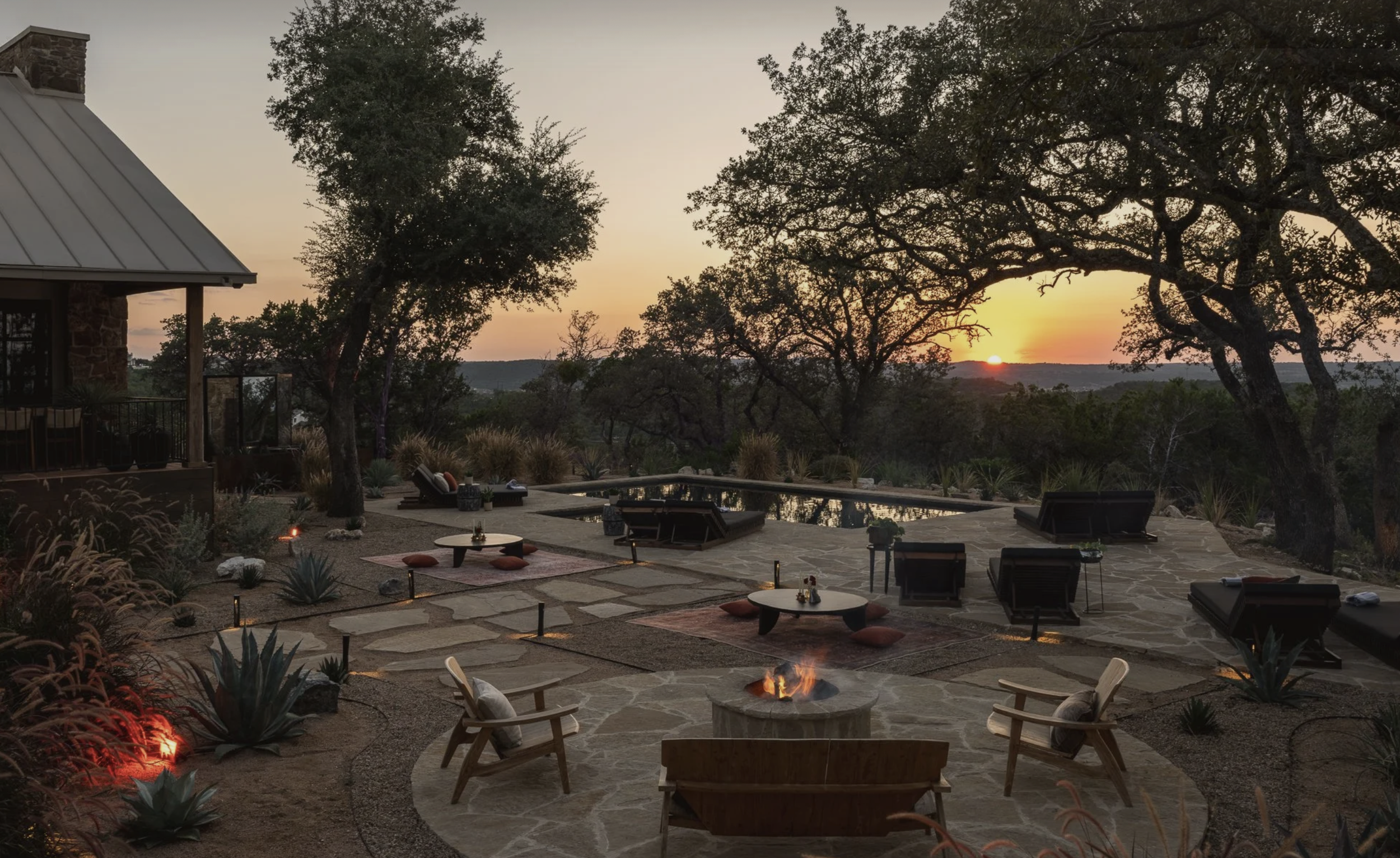
Havan Estate
3. Define the budget
Before you start booking, get clear on the overall budget and what that budget needs to cover. What is your target cost per person? Will the company be covering airfare or other travel expenses? What about lodging, meeting space, food and beverage, transportation, activities, AV, or event production? Your budget will influence many of the decisions that come next, so having a realistic picture of the total investment early on can save you a lot of headaches later. Also, it’s important to note that your budget will fluctuate as you make tradeoffs in your planning, so keep that in mind. This is also where it may be helpful to work with a planner who can manage your budget wisely ;)
4. Think beyond the meeting room
Yes, the meeting room will likely be the meat and potatoes of your offsite or retreat — but it’s often the little moments surrounding the programmed sessions that make for a really great experience.Think about arrival, transportation, meals, breaks, activities, downtime, and all the other details that help the experience feel seamless for your guests.What happens between sessions? Is there somewhere comfortable for people to grab a coffee and continue a conversation? Is transportation clear and easy to navigate? Are meals and breaks built into the day in a way that gives people time to reset? Those details may not show up on the main agenda, but they can make a big difference in how people experience the event (and what they end up taking away at the end!).
5. Build a realistic agenda
It’s tempting to pack as much as possible into an offsite or retreat, especially when you have a limited amount of time together.But people also need room to breathe, connect, and process what they’re learning. Building in buffer time gives attendees a chance to have conversations, take a break, and actually absorb the information and takeaways from the retreat. It also allows them to be present throughout the retreat. A full agenda doesn't necessarily mean a more productive one. Give people some breathing room, and your guests will thank you for it.
6. Plan the guest experience from beginning to end
Especially for a multi-day retreat or offsite — and particularly when travel is involved — the guest experience is one of the most important pieces of the planning process.Your attendees are stepping out of their normal routines for a few days, and thoughtful details can make the entire experience feel easier and more enjoyable. When building your agenda and planning the event, think about the guest experience from the moment someone arrives until the moment they leave. A few questions to consider:
What happens when someone arrives?
Where do they go, and how will they know where to go?
What information do they need before and during the event?
How will transportation work?
Where will meals and breaks happen?
What will make the experience feel thoughtful without feeling overproduced?
The goal isn't to fill every moment with programming. It's to make the overall experience feel easy to navigate and well thought out.
7. Know what you need help with
Planning a great retreat or offsite takes a LOT of time. And if you've been tasked with planning one on top of your regular job, it can quickly become more work than you anticipated. Start by thinking about what you actually have the bandwidth to own.
Are you responsible for the strategy and programming, or does that fall to a member of the leadership team?
Who is handling the venue?
Who is sourcing and managing vendors?
Who is coordinating transportation, meals, timelines, and guest communications?
And who is going to be onsite making sure everything actually happens as planned?
You don't necessarily have to hand the entire retreat over to an outside planner or producer. Sometimes you simply need someone to take ownership of a few key workstreams or step in with additional production support. Knowing where you need help early can make the planning process much more manageable (and enjoyable!).
8. Austin + the Hill Country offer different possibilities
Austin and the Texas Hill Country have become popular destinations for companies planning retreats, offsites, and other group experiences. I recently attended Visit Austin’s Annual Meeting, and it was really interesting to hear about the momentum around groups and events coming to Austin and the continued growth of the hospitality and meetings industry here. And with the range of hotels, ranches, resorts, restaurants, activities, and event venues in the area, there are plenty of ways to create an experience that goes beyond a traditional conference room. As an Austin-based event planner and producer, I'm familiar with the local venue, hospitality, supplier, and event ecosystem. I also know some of the quirks that come with planning events here — like being mindful of major event weekends such as ACL and Formula 1 and the workarounds for that if you choose to host your event during those times.If you're bringing a team to Austin or the Texas Hill Country, local knowledge can make a big difference in the planning process.
Planning a retreat or offsite in Austin or the Texas Hill Country?
If you’re in the middle of planning, or just getting started, I’d love to be a resource! Maybe you just need some help brainstorming, need to hand off a few pieces, or want the entire thing off your plate — I can help. I’d love to hear what you’re envisioning for your next retreat or offsite. Let’s chat!
